

Field operations
PPE tracking by trade and subcontractor
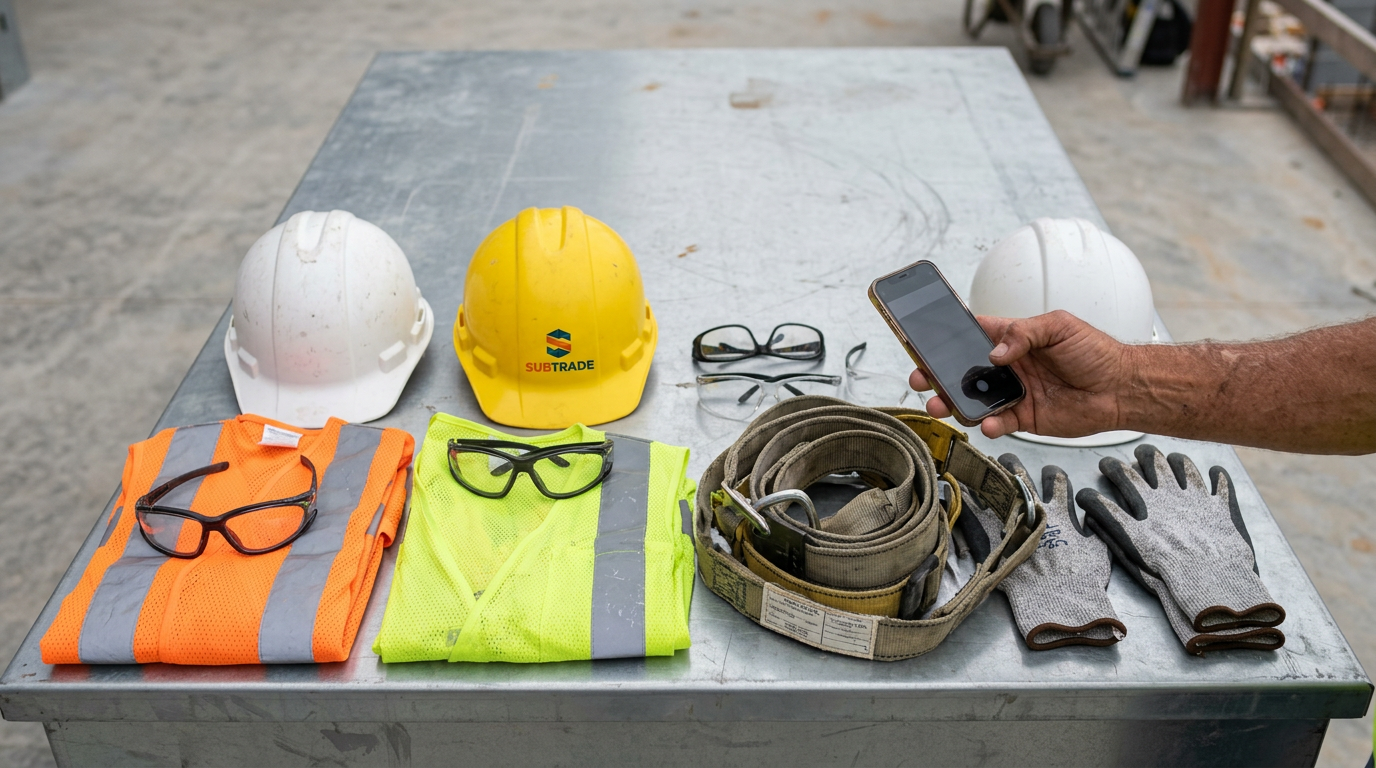
Ask most subcontractors who has current PPE and you get a shrug and a clipboard that was accurate three sites ago. The gear is real — the hard hats, the cut-resistant gloves, the arc-rated clothing, the fall-arrest harnesses — but the record of who has what, and whether it's still in date, lives in a foreman's memory and a laminated sheet on the gang box. That's fine right up until a safety officer asks for it, or someone gets hurt in the wrong glove.
Tracking personal protective equipment properly isn't about buying more gear. It's about knowing, at any moment, which crew member on which site has the right PPE for the work in front of them, and when the dated items are due for replacement or re-inspection. Here's how to build that as a field system rather than another binder nobody updates.
Why PPE tracking breaks down for subs
A sub-trade's PPE problem is different from a GC's, for the same reason everything else is: you're spread thin across many jobs at once, and the crews move.
The gear moves faster than the paperwork
A framer might be on three sites in a week. The harness that was on the north tower Monday is on a tenant fit-up by Wednesday. A central spreadsheet updated by the office is always describing where things were, not where they are.
PPE requirements change by trade and by task
This is the part generic safety software misses. PPE isn't one list — it's trade-specific and task-specific:
- Electrical: arc-rated clothing, voltage-rated gloves with a current test date, insulated tools.
- Drywall and framing: cut-resistant gloves, respirators for sanding, hearing protection around fastening tools.
- Concrete: chemical-resistant gloves and boots, eye protection for pours, knee protection for flatwork.
- Mechanical and glazing: fall protection, cut protection, task-specific respirators.
A tracking system that treats PPE as one generic checkbox can't tell you whether the electrician on site actually has voltage-rated gloves that passed their last test.
The dated items are the ones that bite
Some PPE has a clock on it. Voltage-rated gloves need periodic testing. Fall-arrest harnesses need documented inspection and eventual retirement. Respirator fit-tests expire. Those dates are exactly what a paper list is worst at — nobody flips through a binder looking for what's about to lapse.
What "good" PPE tracking looks like
The goal is a live picture with three axes: by person, by trade, and by site. You should be able to answer, in one place, "does every electrician on Building C have in-date voltage-rated gloves," and "which harnesses are due for inspection this month," without calling three foremen.
Track it against the person, not the pile
Assign PPE to the crew member, not to a general inventory. When gear is issued, it's logged to a name with a date; when it's dated equipment, the next-due date goes on with it. Now the record moves with the person across sites automatically, because you're tracking who has it, not where the box is.
Make issue and inspection a field action
The foreman is the only one who actually sees the gear, so the logging has to happen in his hand. Issuing a new harness, recording a monthly inspection, flagging a cracked hard hat for replacement — all of it should be a phone tap on site with a photo, not a note passed to the office to enter later. This is exactly the kind of thing custom safety forms are for: a PPE issue log and an inspection checklist that live on the same phone the crew already uses for their daily log.
Photograph the condition
A dated photo of a harness label or a glove test stamp is worth more than a checkbox, because it's evidence. When PPE is issued or inspected, a quick site photo tied to the record turns "we said it was fine" into "here's the dated proof it was fine."
Tie PPE to the crew that's actually on site
Because you already know who's clocked onto which job from crew scheduling and time tracking, PPE status can ride along with the crew list. The foreman opening today's crew sees not just who's on site but whether anyone's fall protection is overdue for inspection before they go up.
A simple tracking table to start from
You don't need software to begin — you need the right columns. Here's the minimum structure, whether you start it in a sheet or build it into your field app.
| Field | Why it's there |
|---|---|
| Crew member | PPE follows the person, not the box |
| Trade / task | Drives which PPE is actually required |
| Item + serial | Harnesses and dated gear need unique IDs |
| Issue date | Establishes the baseline |
| Next-due date | Inspection, test, or replacement clock |
| Last inspection + photo | Evidence, not just a claim |
| Current site | So you know what's where today |
The catch with a spreadsheet is that it can't remind you. Someone has to open it and scan for lapses, which is the step that never happens. The moment PPE tracking earns its keep is when the "next-due" date pushes a notification to the foreman instead of waiting to be found.
The safety and paperwork payoff
Two things happen when PPE tracking is live instead of laminated.
First, prime contractors and owners increasingly ask subs to demonstrate their safety program, not just claim it. Being able to produce a current PPE register by crew, with inspection dates and photos, is the kind of thing that keeps you on the approved-vendor list. It pairs naturally with your other compliance paper — WCB clearance, certificates of insurance, toolbox-talk records — as one coherent safety picture.
Second, and more important, the right gear is actually on the right person. The Canadian Centre for Occupational Health and Safety keeps a clear, free reference on selecting and maintaining PPE — the point they make repeatedly is that PPE only protects when it's the right type, in good condition, and correctly maintained. A tracking system is how you prove all three are true on a Tuesday afternoon, not just on the day of the audit.
If you're building out the rest of your field safety and documentation stack, our construction management features show how PPE tracking, daily logs, photos, and custom forms sit on one system. SubTrade starts at $299/month CAD with a 14-day free trial and no credit card required.
FAQ
How do you track PPE for a subcontractor crew?
Assign each item to the crew member rather than to a general inventory, log the issue date and any next-due date for dated gear, and let the record move with the person across sites. Do the logging in the field on a phone, with a photo, so it stays current.
Why track PPE by trade?
Because PPE requirements are trade- and task-specific — arc-rated clothing for electrical, respirators for drywall sanding, chemical-resistant gear for concrete. A generic checklist can't tell you whether the person on site has the specific protection their work requires.
What PPE has expiry or inspection dates?
Fall-arrest harnesses need documented inspection and eventual retirement, voltage-rated gloves need periodic testing, and respirator fit-tests expire. These dated items are exactly what a paper binder is worst at surfacing before they lapse.
Can I track PPE in a spreadsheet?
You can start there, and the right columns matter more than the tool. The limit is that a spreadsheet can't remind you — someone has to open it and scan for lapses. Field software earns its keep by pushing a notification when an inspection or test comes due.
How does PPE tracking help with prime-contractor compliance?
Owners and GCs increasingly ask subs to demonstrate a real safety program. A current PPE register by crew, with inspection dates and photos, sits alongside WCB clearance and insurance certificates as evidence that keeps you on the approved-vendor list.
Where should PPE records live?
On the same phone the crew already uses for time and daily logs, so issuing and inspecting gear is a field action rather than office data entry. Custom safety forms are the practical home for a PPE issue log and inspection checklist.
SubTrade runs time tracking, change orders, daily logs and progress billing on one plan. 14-day trial, no credit card.