

Estimating
Plumbing contractor estimating guide
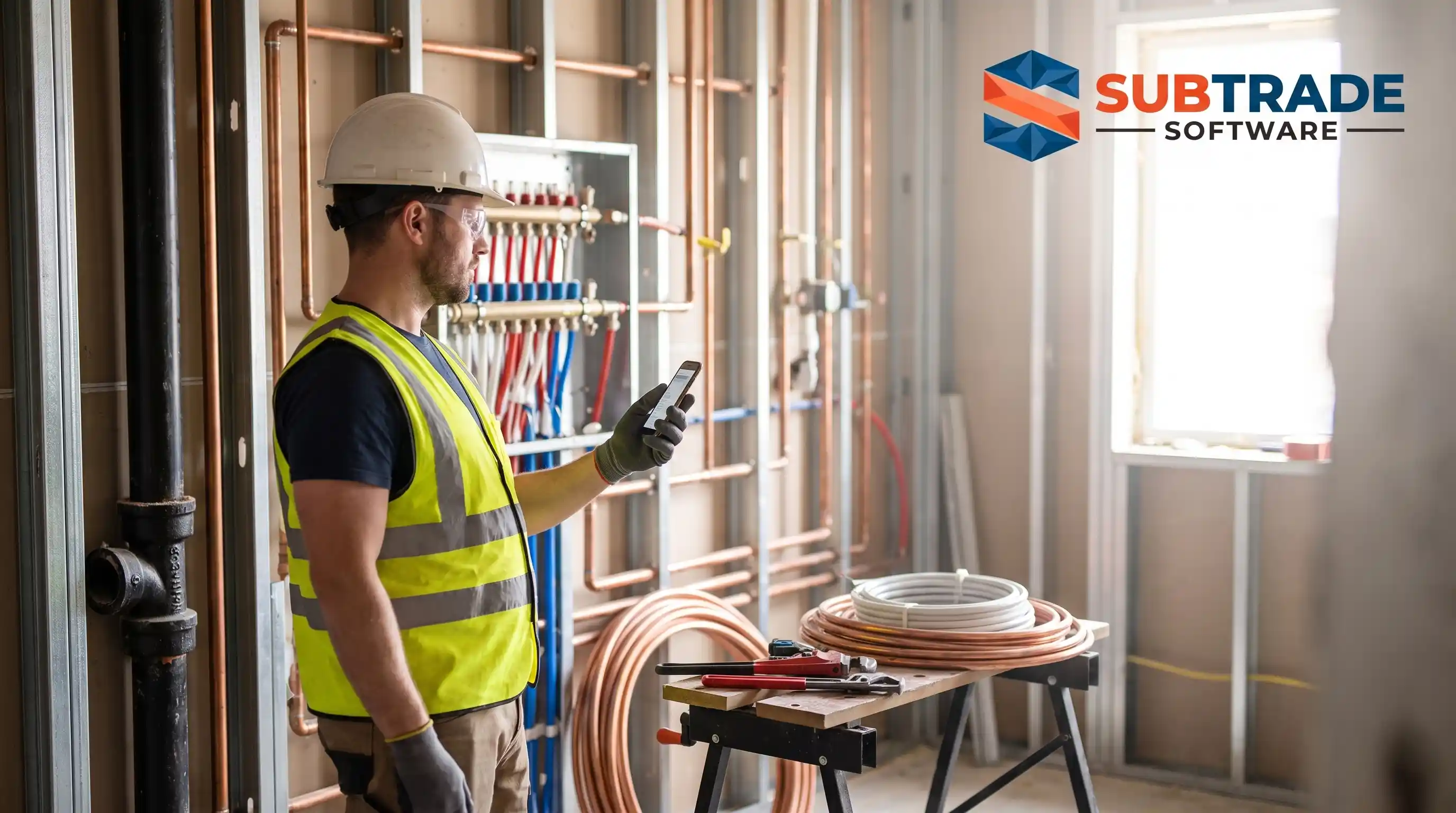
A plumbing estimate lives or dies on two numbers: how much pipe and fixture you install, and how many labour hours it takes to install them. The material takeoff is the easy part. Any half-decent plumber can count fixtures off a drawing and price copper, PEX and cast iron by the foot. The number that sinks plumbing contractors is labour, because labour is where the estimate meets reality on a jobsite that never runs the way the drawings said it would.
We built SubTrade inside Quality Gypsum Services, a commercial drywall contractor in Calgary, Alberta, after years of watching jobs that looked profitable on paper come back short once the field hours were counted. Drywall is not plumbing, but the trap is identical: a good takeoff, a labour number pulled from a gut feel, and no way to check the two against each other until the job is done and the money is gone. Here is how a plumbing subcontractor closes that gap.
Start the estimate with your own production rates
A production rate is the unit of a plumbing estimate. Not dollars, not "a couple of days." Fixtures set per man-day. Feet of pipe roughed in per man-hour, by material and diameter. Rough-ins per plumber on a repetitive multi-unit job. These are the numbers that turn a takeoff into an hour count, and an hour count into a price.
The mistake is borrowing them from a national database or a competitor's rule of thumb. A published rate says nothing about your crew, your typical building type, or how your foremen actually sequence a rough-in. The plumber who sets 14 fixtures a day on tenant improvement work and the one who sets 6 on a hospital are both right for their own work and both wrong for each other's.
Your own history is the only production rate worth estimating from. That means the last job has to hand you a real number: hours actually spent, against the scope actually installed. If your labour is living on paper timesheets retyped on Monday, you never get that number back clean, so every estimate stays a guess. Accurate field time tracking, coded to the job and the phase, is what turns finished jobs into an estimating database instead of a pile of receipts.
The units that actually matter in plumbing
| Scope | Estimate in | Not in |
|---|---|---|
| Fixture set | Fixtures per man-day | Total dollars |
| Rough-in pipe | Feet per man-hour, by material and size | Feet, unpriced |
| Drainage, waste, vent | Fixture units and connections | Square feet |
| Underground | Feet plus tie-ins and inspections | A lump allowance |
| Trim out | Fixtures per man-day, finished | The rough-in rate |
A platform that only understands "square feet" understands none of these, which is exactly why a purpose-built tool beats a generic one. The units a plumber lives on are trade-specific, the same way board hung per man-hour is specific to drywall. You can see how we assemble the field side of that in our plumbing contractor software and across the wider construction management features.
Price labour honestly, then add the parts of the job nobody bids
Once the takeoff is converted to hours, multiply by a fully loaded labour rate. Fully loaded means the wage plus burden: WCB, benefits, vehicle, small tools, and the unbillable time between tasks. A plumbing crew is not billable eight hours out of eight, and a bare wage rate pretends otherwise.
Then price the parts of a plumbing job that live outside the fixture count:
- Coordination and layout with other trades, because plumbing rarely gets the wall to itself
- Inspections and the rework that follows a failed one
- Excavation, backfill and compaction on underground scope
- Testing, flushing and commissioning at the end
- Mobilization to a site that is nowhere near ready for you
These line items are where thin bids go to die. A tight fixture price with none of this built in wins the job and loses the money.
Protect the estimate once the job starts
Winning the bid is the halfway point. The other half is defending the number against everything a live job throws at it, and that is a field problem, not an estimating one.
Watch job cost while you can still act on it
The single most useful screen in plumbing software is a live job cost view: budgeted hours against actual hours, by phase, updated as the crew clocks in. If your rough-in was bid at 320 hours and you are 240 hours in with the second floor untouched, you need to see that this week, not at closeout. A losing job caught in week two can be recovered by resequencing or renegotiating. The same job discovered at final billing is just a loss you get to explain to yourself. Statistics Canada's construction data shows how much non-residential volume swings quarter to quarter, and the shops squeezed in a soft stretch are usually the ones who could not see their labour cost until the job was over.
Turn extra work into signed change orders
Plumbing runs into more field changes than almost any trade, because it depends on drawings from mechanical, structural and architectural all being right at once, which they are not. A relocated fixture, a wall that moved, a conflict with ductwork: every one of those is extra work, and every one is money only if it is documented the day it happens. Log the direction you were given, price it from your own labour rates, attach a dated photo, and track it until someone signs. Most plumbing subs lose more margin to unsigned extras than to a soft bid. A workflow built around change order management from the subcontractor's side, not the general contractor's, is what keeps that money on your side of the ledger.
Close the loop back to the next estimate
When the job finishes, the actual hours per phase should flow straight back into your production rates. That is the whole point of tracking labour by cost code: this job's reality becomes next job's estimate. Do that for a year and your bids stop being hopeful and start being historical.
What to look for in plumbing estimating software
Strip away the demos and a plumbing contractor's system has to do four things well. It has to capture field labour on a phone, coded to the job and phase, without a Monday retype. It has to roll those hours into a live job cost view automatically. It has to make change orders unavoidable, with photos and a paper trail. And it has to hand your production rates back to you when it is time to bid the next one.
Everything else is useful, but those four are the spine. If a tool cannot answer "what did this job cost me in labour, by phase" without an export to a spreadsheet, it was not built for a subcontractor's seat.
SubTrade starts at $299/month CAD with a 14-day free trial and no credit card required, so you can run last year's worst job through it and see whether the software would have caught it in time.
FAQ
How do plumbing contractors estimate labour?
Convert the fixture and pipe takeoff into hours using your own production rates, then multiply by a fully loaded labour rate that includes burden and unbillable time. The rates have to come from your own completed jobs, not a national average, or the estimate is a guess.
What is the biggest mistake in plumbing estimates?
Underpricing labour, usually by using a bare wage instead of a fully loaded rate and by forgetting coordination, inspections, testing and rework. The material takeoff is rarely where a plumbing job loses money.
Do I need plumbing-specific software or will general construction software work?
General platforms track projects; a plumbing sub needs to track crews, hours and cost codes in trade units. If the tool only understands square feet and cannot show installed cost by phase, it will not hold your margin. A workflow built for the trade will.
How does job costing help a plumbing contractor?
It shows budgeted hours against actual hours while the job is still running, so a job that is going over gets caught in week two instead of at closeout. It also feeds finished-job data back into your estimating rates.
How much does plumbing contractor software cost?
Expect a monthly subscription rather than per-project fees. SubTrade starts at $299/month CAD. Watch per-seat pricing carefully if you run a large field crew, because the math gets ugly when every plumber needs a licence.
Can I estimate and track change orders in the same system?
That is the point of a subcontractor-built tool. The same production rates you bid with should price your extras, and the same field app should attach the photo and chase the signature until the change order is approved.
SubTrade runs time tracking, change orders, daily logs and progress billing on one plan. 14-day trial, no credit card.