

Field operations
Construction daily log best practices
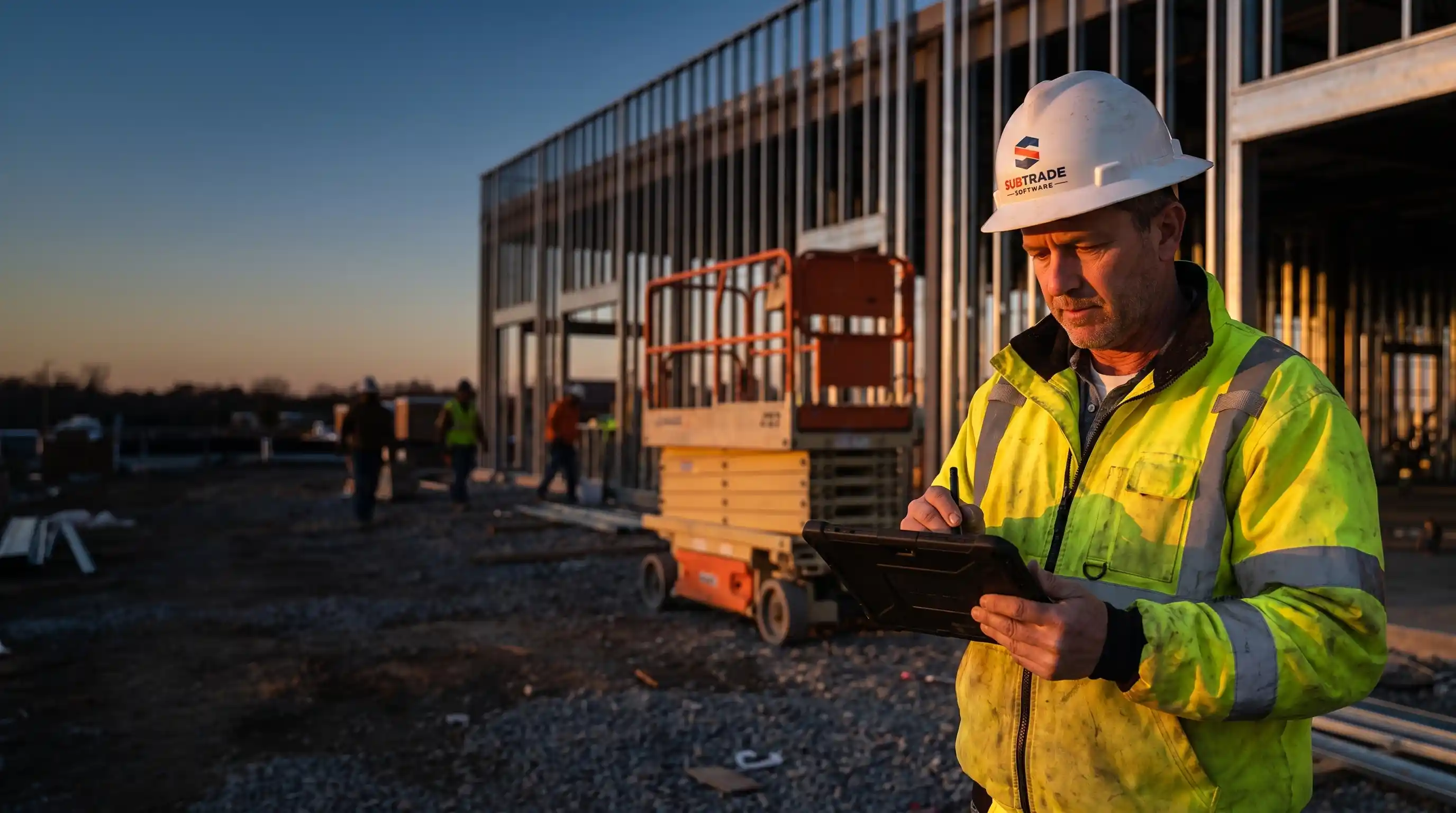
A daily log is the cheapest insurance a subcontractor owns, and the one most crews skip until the day they need it and it is not there. When a schedule dispute lands, when a back-charge shows up, when someone claims your crew was not on site, the log is the record that settles it. Not the one you reconstruct from memory three weeks later. The one written the day it happened, with a timestamp nobody can argue with.
We built SubTrade inside Quality Gypsum Services, a commercial drywall contractor in Calgary, Alberta, and the daily log was the feature our own foremen resisted most and relied on hardest. Here is what actually belongs in one, and how to get it done in the field without turning it into a chore.
What a daily log has to capture
A log that only records "worked on drywall, good day" is worthless the moment it matters. The entries that protect you are specific and countable.
Headcount and hours by crew. Who was on site, on what scope, for how long. This is the backbone. If a general contractor back-charges you for a delay, your headcount log is the first thing that proves your crew showed up and was ready to work.
Weather and site conditions. Temperature, precipitation, and anything that stopped work: no heat in the building, a floor that was not ready, a hoist that was down. Weather-related delay claims live or die on whether you logged the condition the day it occurred.
Delays and disruptions, with cause. The single most valuable field in the log. "Held off level 3 east, GC had not released the deck" is a sentence that can be worth thousands when the schedule slips and everyone starts pointing fingers. Log the delay, name the cause, note who you told.
Deliveries and equipment. Material that arrived, equipment on site, anything rented and idle. Idle equipment during someone else's delay is a real cost you can only recover if you recorded it.
Photos, dated and located. Progress, conditions, and problems. A jobsite photo with a reliable timestamp is the difference between "we think it was around then" and proof.
Why the timestamp is the whole point
A daily log is only evidence if nobody could have written it after the fact. A paper log filled out on Friday for the whole week is not a record, it is a recollection, and any adjuster or GC knows it. The value comes from contemporaneous entry: written on the day, ideally on the device that stamps the time and does not let you quietly edit yesterday.
This is why logs kept in a notebook or a group chat fall apart under scrutiny. The notebook has no verifiable date. The chat is scattered across a dozen threads and screenshots. A proper daily log system stamps every entry and photo automatically, so the record defends itself.
Make the field two minutes of work, not twenty
Every foreman knows they should keep a log. The reason they do not is that most systems make it a twenty-minute typing exercise at the end of a ten-hour day. If it takes longer than a smoke break, it will not get done, and a log with holes in it is worse than useless because the gaps are exactly where the dispute will land.
The fix is to shrink the effort. Pull the headcount straight from the crew's time tracking so the foreman is not retyping names and hours. Default the weather. Make photos a two-tap action. Let the delay note be a sentence, not a form. The best daily log is the one that gets filled out every single day because it costs almost nothing to fill out.
| Log element | Why it matters | Common failure |
|---|---|---|
| Headcount and hours | Proves crew was present and ready | Retyped from memory, so skipped |
| Delays with cause | Basis for delay and back-charge claims | Logged vaguely or not at all |
| Weather / conditions | Supports weather delay claims | Recorded only when remembered |
| Dated photos | Evidence a timestamp makes undeniable | Stored on phones, never centralized |
| Deliveries / idle equipment | Recovers standby and idle costs | Never captured |
How the log connects to getting paid
A daily log is not just a defensive document, it feeds the money. When you submit an unsigned change order for extra work, the log entry and the dated photo are the backup that gets it approved. When you bill progress and the GC questions it, the headcount history supports your percentage. When a delay claim goes to the standby line, the log is the source.
In Alberta, where prompt payment rules put owners on a 28 calendar day clock and require a proper invoice with backup, the daily log is part of what makes an invoice "proper." Backup documentation that was captured contemporaneously carries far more weight than anything assembled after a dispute starts.
A daily log routine that sticks
The habit matters more than the tool. A workable routine looks like this:
- End of shift, on site, before anyone leaves. Not in the truck, not at home. On site while the details are fresh.
- Headcount pulled from time tracking, confirmed by the foreman with one tap.
- Delays and disruptions logged in plain language, with the cause and who was notified.
- Two to five photos of progress and any problems, stamped automatically.
- Weather and conditions defaulted and adjusted only if notable.
- Submitted, not saved as a draft. A submitted log is a record. A draft is nothing.
Do that every day and after a month it is muscle memory. Skip it and the one day you needed it will be the one day it is blank.
Our daily logs feature is built around that two-minute routine, and it ties into the rest of the construction management features so the log, the photos, and the labour data all live in one place. SubTrade starts at $299/month CAD with a 14-day free trial and no credit card required.
FAQ
What should a construction daily log include?
At minimum: crew headcount and hours by scope, weather and site conditions, any delays or disruptions with their cause, deliveries and equipment on site, and dated photos. For a subcontractor the delay entries and the headcount are the most valuable, because they are what support back-charge defenses and delay claims.
Who is responsible for the daily log on a jobsite?
The site foreman or lead usually owns it, but every subcontractor should keep their own log independent of the general contractor's. Relying only on the GC's record means you have no independent evidence when a dispute is between you and the GC.
How is a daily log different from a daily report?
They are the same thing in most usage: a dated record of what happened on site that day. Some GCs call the formal submitted version a daily report and the field notes a log. What matters is that it is contemporaneous, specific, and stamped.
Why do timestamps matter so much on a daily log?
Because a log's evidentiary value depends on it being written the day the events happened. A record assembled later can be dismissed as a reconstruction. Automatic timestamps on entries and photos are what make the log hold up in a dispute.
How long should keeping a daily log take each day?
Two to five minutes if the system pulls headcount from time tracking and makes photos a couple of taps. If it takes longer, foremen stop doing it, and a log with gaps is where the next dispute will land. Speed is not a nice-to-have, it is what makes the log reliable.
Can I use a notebook or group chat instead?
You can, but it will not defend you well. A notebook has no verifiable date and a chat scatters the record across threads and devices. A centralized, timestamped log keeps everything in one place with dates nobody can dispute.
SubTrade runs time tracking, change orders, daily logs and progress billing on one plan. 14-day trial, no credit card.