

Getting paid
7 reasons your holdback is released late
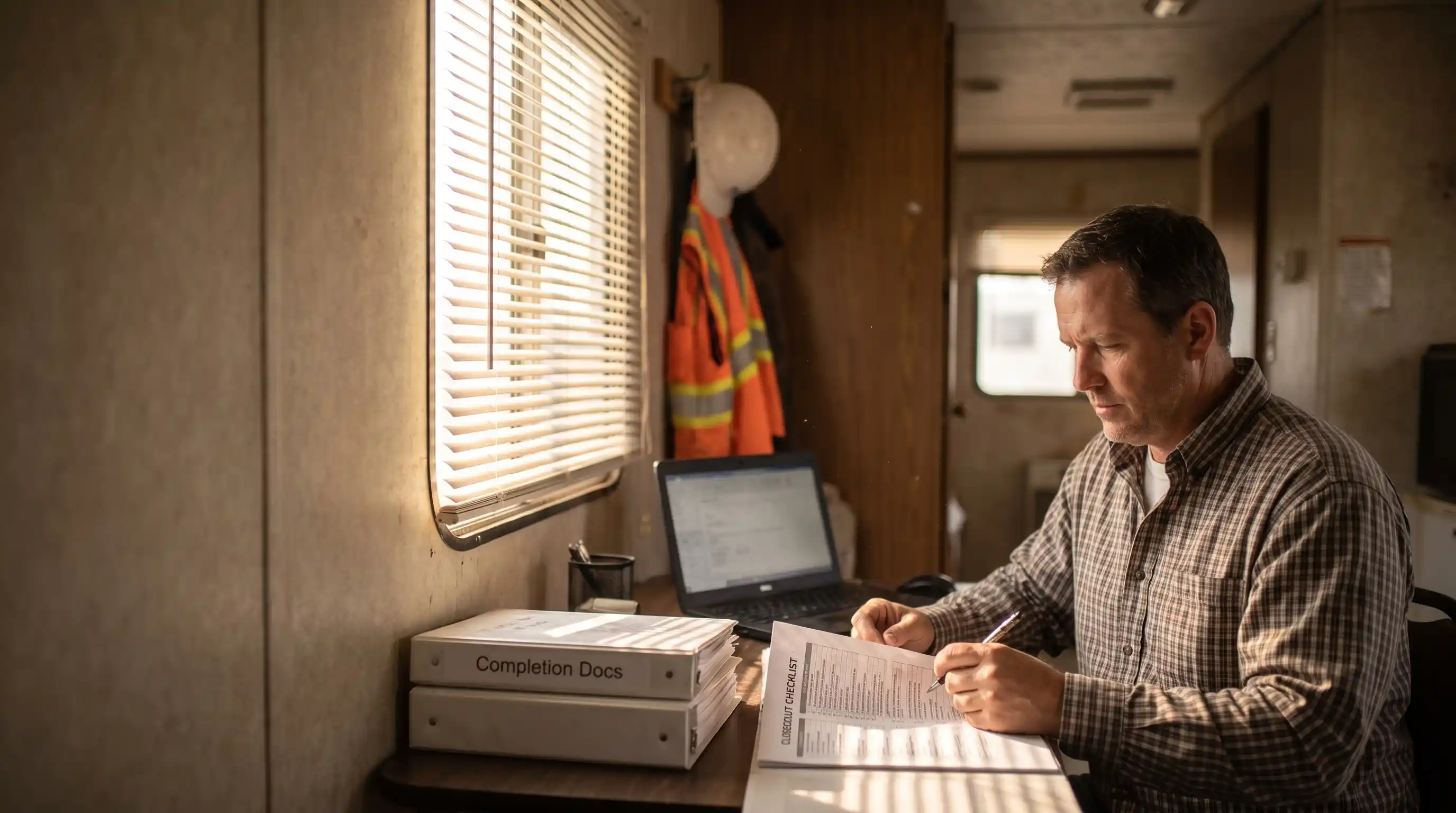
Your holdback is often the difference between a profitable job and a cash crunch. It is 10% of every invoice on most Canadian jobs, earned but parked, and when release drags weeks or months past when it should, that parked money is what forces you to borrow to mobilize the next job. The frustrating part is that holdback rarely stays late because someone is refusing to pay. It stays late because a piece of paper is missing, a date was not documented, or nobody was tracking the release clock. Fix the paperwork habits and most of the delay disappears.
We learned this running crews at Quality Gypsum Services, our commercial drywall business in Calgary, Alberta. Here are the seven reasons holdback release stalls, and what actually clears each one.
First, why the delay hurts more than it looks
A late holdback is not just an annoyance, it is a financing cost you are absorbing for free. On a $500,000 contract, 10% is $50,000 sitting out of reach. Carry that across four or five active jobs and you can have six figures stranded, right when payroll and material deposits on the next project are due. Every week of unnecessary delay is a week you are lending that money to someone up the chain at zero interest.
The seven reasons below are the ones we see over and over. None of them require a lawyer to fix. They require the paperwork to exist, tied to a date, before release is due.
The seven reasons, and the fix for each
1. Substantial completion was never properly certified
Holdback release is anchored to substantial performance, and the lien clock does not start until that is certified and, where required, published. If the milestone was reached but never formally documented, your release date is not late, it simply has not started counting.
The fix: know the substantial performance date for every job and make sure it is certified in writing, not just understood on site. That single date drives your entire release timeline.
2. The deficiency list is still open
A holdback exists partly to cover deficiencies, so an open deficiency or punch list is the most common reason a payer keeps holding. As long as items are outstanding, they have a reason to sit on the fund.
The fix: close deficiencies fast and prove it with dated photos. A punch item photographed complete on the day it was fixed is far harder to keep using as a reason to withhold than a verbal "we took care of that." Your site photos are the evidence that closes the list.
3. Lien or holdback paperwork is missing or late
Many releases require a statutory declaration, a CCDC 9A or 9B, confirming your subs and suppliers have been paid. If that document is missing, wrong, or arrives late, release waits on it, no matter how finished the work is.
The fix: prepare the declaration and any required lien paperwork ahead of the release date, not after someone asks for it. Treat it as part of closeout, not an afterthought.
4. A Notice of Non-Payment was not answered in time
In prompt-payment provinces, if the payer disputes an amount they issue a Notice of Non-Payment, and you have a limited window to respond. Miss that window and the dispute hardens, dragging the related holdback with it.
The fix: treat any Notice of Non-Payment as urgent and respond inside the deadline with your backup attached. For the deadlines behind this, see our guide to construction holdback by province. If the payer simply will not release money you are owed, adjudication is the fast-track route, covered in construction adjudication in Canada.
5. The lien period simply has not expired yet
Sometimes nothing is wrong. The holdback becomes payable only after the statutory lien period runs out, and that period differs by province, from 40 days in Saskatchewan and Manitoba to 60 in Alberta and Ontario, longer for concrete and oil and gas work in Alberta.
The fix: do not chase before it is due, and do chase the day it is. Knowing the exact release date per job stops you from both wasting a call and missing the moment it becomes collectable.
6. Long-project holdback was never requested at annual release
On large, long projects, some provinces now require holdback to be released annually rather than held until the very end. Alberta allows this on contracts over $10 million running longer than 12 months. Many subs never ask, and the fund keeps accumulating untouched for years.
The fix: if you are on a multi-year job that qualifies, put the annual release on your calendar and request it. That is real cash you are entitled to collect long before final completion.
7. Manual tracking errors and lost invoices
The quiet killer. A holdback whose release date lived only in one person's head, an invoice that was never followed up, a draw where the accumulated holdback was miscalculated. None of these look like a problem until the money is months late and nobody noticed.
The fix: track accumulated holdback and its release date per job automatically, off your actual draws, so nothing depends on memory. When the number and the date are always in front of you, release becomes something you collect on schedule instead of discover by accident.
A holdback follow-up checklist
Before release is due on any job, confirm you have:
- The certified substantial performance date on file
- The deficiency list closed, with dated photos proving it
- The statutory declaration and any lien paperwork prepared
- Every Notice of Non-Payment answered inside its deadline
- The exact lien-period release date on your calendar
- Any annual release requested on qualifying long projects
- Accumulated holdback per job reconciled against your draws
Run that list on every job and six of the seven delays never happen.
Know your number before you chase it
You cannot collect what you have not calculated. Before you pick up the phone, know exactly what holdback is owed and when it became payable, so the conversation is "release the $47,500 that came due last Tuesday," not "I think you owe us something." Run it through our free construction holdback calculator, which works out the holdback withheld and the release timing and exports a one-page summary you can attach to your claim. The draws that feed it come straight off your field data in our progress billing tools.
SubTrade starts at $299/month CAD with a 14-day free trial and no credit card required. The calculator is free to use right now.
FAQ
Why is my construction holdback released late?
Usually because a required document is missing or a date was never formally set: substantial completion not certified, an open deficiency list, a missing statutory declaration, or an unanswered Notice of Non-Payment. Sometimes the lien period simply has not expired yet.
When does holdback have to be released?
After substantial performance is certified and the statutory lien period expires, which ranges from about 40 to 60 days depending on the province. On qualifying long projects, some provinces require annual release rather than waiting until the end.
How can a subcontractor get holdback released faster?
Certify substantial completion in writing, close deficiencies with dated photos, prepare the statutory declaration ahead of time, answer any Notice of Non-Payment inside the deadline, and track the exact release date per job so you claim it the day it comes due.
What paperwork do I need to release holdback?
Typically a certified substantial performance date, a closed deficiency list, and a statutory declaration such as a CCDC 9A or 9B confirming your subs and suppliers are paid. Provinces and contracts vary, so check the specific requirements on your job.
Can I get holdback released before the job is finished?
On large, long projects, yes. Some provinces require annual holdback release on contracts that pass a value and duration threshold, such as over $10 million and longer than 12 months in Alberta. You usually have to request it.
What if the payer refuses to release my holdback?
If the holdback is due and the payer will not release it, adjudication in prompt-payment provinces is a fast-track route to a binding interim determination, and lien rights remain available. Clean records of your dates and draws are what make that case short.
SubTrade runs time tracking, change orders, daily logs and progress billing on one plan. 14-day trial, no credit card.